Dumpster Permit New Bedford MA: When You Need One
A driveway drop usually needs no permit; a container on a New Bedford street usually does. Here is how the rules work and how to plan around them.
ReadNew Bedford, MA guide
Massachusetts bans a long list of materials from disposal. A New Bedford operator walks through what goes in a container, what never does, and what contamination really costs.
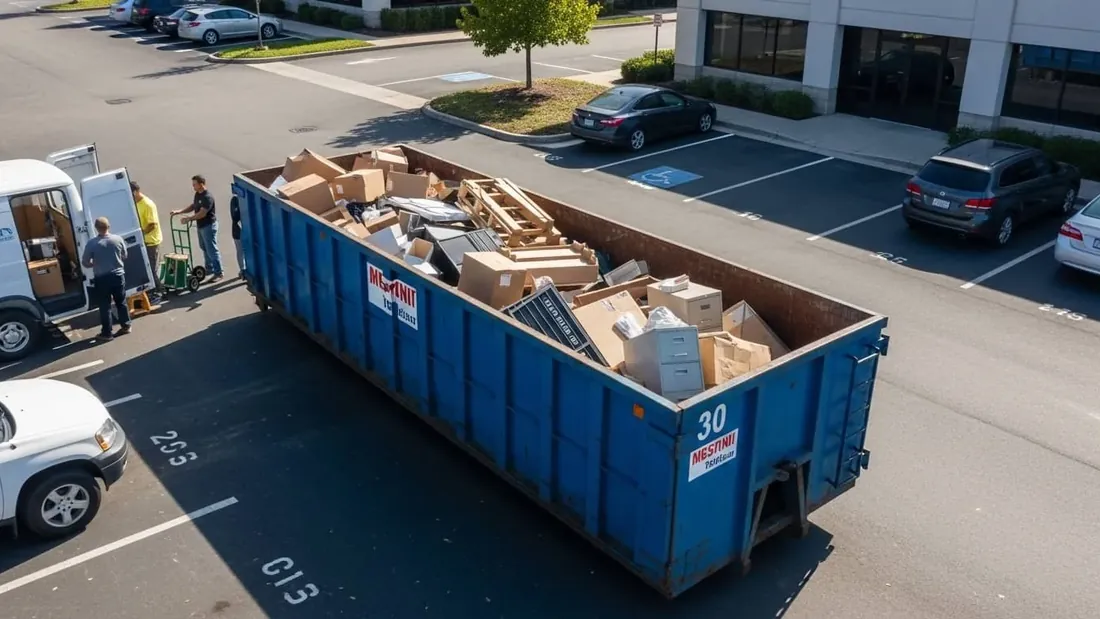
If you rented a container in Florida or the Carolinas and threw everything into it, you will get caught out here. Massachusetts bans a long list of materials from being landfilled or incinerated, and most of this state's trash goes to an incinerator. Those bans come from MassDEP. They are not our policy and not fine print. Every legitimate hauler on the South Coast works to the same list, and the facilities we tip at check loads before they weigh us out.
The practical effect is that a Massachusetts roll-off is a sorted container, not a hole in the ground on wheels. Concrete goes one direction, metal another, wood another again. A mattress cannot ride along with the sofa. Clean drywall offcuts from a new build are handled differently from the plaster and lath off a triple-decker on Rockdale Avenue. See the logic and the rules stop feeling arbitrary.
What follows is that list in driveway-and-truck terms: what each category means on a job, what to do with the material instead, and what it costs when something prohibited rides along. MassDEP publishes the authoritative version at mass.gov.
Usually shortened to ABC. Tear out a driveway apron in Dartmouth, break up a patio slab in Fairhaven, demo a chimney base — all of it is banned and belongs in a heavy aggregate stream that gets crushed and reused. It is also the heaviest material we handle. Book a concrete and heavy debris container and keep it clean: no dirt clods, no wood forms, no mesh tangled through it. A clean aggregate load is one of the cheapest things you can move in this state. A contaminated one is among the priciest.
Ferrous and non-ferrous both — steel studs, cast iron radiators, copper pipe, storm windows, a dead water heater. Scrap has value, so this ban is rarely a hardship: pull it into its own pile and it goes out as scrap. The nuance people miss is that "appliance" is not one category. A washer or dryer is straightforward metal. Anything with a sealed refrigerant circuit — fridges, freezers, window air conditioners, dehumidifiers — needs the refrigerant recovered by someone certified before the shell is scrapped. That is a phone call, not a coin flip.
This one trips up new-construction crews. Offcuts and unused board from a build or renovation are banned as a separate recoverable material. Old painted or plaster-backed wall material from a gut does not fall under the clean gypsum ban. So on a construction job the rule is simple: if it came off the truck white and got trimmed to fit, stack it separately. If it came off a wall built in 1912, it is demolition debris. Never mix the two, because mixing turns the clean half into the dirty half.
Treated and untreated both. Framing, sheathing, trim, pallets, decking. On a framing or strip-out job this is often the biggest volume you generate, and it is easy to separate because it comes off in one phase of work. Keep it out of the mixed can and the job gets cheaper. Our construction debris guide covers staging so you are not moving the same board twice.
Banned since November 2022 and easily the most common surprise on residential work. A mattress cannot go in a mixed container, full stop, and neither can a box spring. They are pulled apart at a recycling operation and the steel, foam, fibre and timber come back out. Give us the count when you book. On an estate cleanout with four bedrooms going out at once that number matters. Many retailers will take the old set when they deliver the new one.
Also added in November 2022, and just as poorly understood. Clothing, footwear, bedding, curtains, towels and rags are banned — including the stained, torn and unwearable, because textile recovery does not need things to be nice. Bag them dry and route them to a donation bin or textile collection, not the container.
Leaves, grass, brush and trimmings go to composting or a municipal programme; a dedicated yard waste container handles a genuinely green job. Whole tyres need a tyre recycler or retailer take-back; the four behind the garage are four separate items. Recyclable paper, cardboard, glass and beverage containers are banned too, which on a cleanout mostly means breaking boxes down for curbside. Cathode ray tubes and certain other electronics belong at an electronics collection. Businesses over the organics volume threshold have their own diversion requirement.
Separate from the state bans sits the universal list. Liquids of any kind: wet paint, solvents, thinners, fuel, motor oil, antifreeze. Pesticides. Batteries of every chemistry. Propane tanks and any pressurised cylinder, down to camping canisters. Anything holding refrigerant. Medical and biohazardous waste. Hot ashes, which start more container fires than everything else combined. And asbestos, below. Household hazardous waste days run in most towns around here.
Here is the part nobody advertises. When banned material is spotted at the scale, one of three things happens. Best case it is hand-sorted and you pay a sorting charge. Middle case the load is downgraded, reclassified out of the rate you were quoted. Worst case it is rejected at the gate, comes back on the truck, and you pay for a wasted round trip.
The maths is brutal because it is not proportional. One mattress in a twenty-yard box of household waste does not cost you one mattress — it can change how the entire load is classified. Same with one propane cylinder, or clean drywall buried under general debris. That is why separating pays better here than in most states: the gap between a clean single-material rate and a contaminated mixed rate is wide. Our pricing breakdown shows how it plays out on a typical job.
| Material | Mixed container? | What Massachusetts requires instead |
|---|---|---|
| Household junk, general trash | Yes | Nothing special |
| Furniture, sofas, dressers | Yes | Nothing special — mattresses excluded |
| Carpet and padding | Yes | Nothing special |
| Plaster, lath, mixed demo debris | Yes | Nothing special if asbestos-free |
| Mattresses and box springs | No | Dedicated mattress recycling |
| Textiles, clothing, bedding | No | Textile recovery or donation, dry |
| Clean gypsum wallboard | No | Separate clean drywall stream |
| C&D wood, treated or not | No | Separate wood stream |
| Concrete, brick, asphalt | No | Aggregate recycling, clean load |
| Metal and non-refrigerant appliances | No | Scrap metal recovery |
| Fridges, freezers, AC units | No | Certified refrigerant recovery first |
| Leaves, brush, yard waste | No | Composting or municipal programme |
| Whole tyres | No | Tyre recycler or retailer take-back |
| Paint, fuel, solvents, chemicals | No | Household hazardous waste collection |
| Propane and pressurised cylinders | No | Exchange point or hazardous collection |
| Asbestos-containing material | Never | Licensed abatement contractor only |
Plenty does. Mixed household waste, bagged or loose. Furniture of every description, sofas through headboards. Carpet and padding, rolled and tied. Toys, tools, garage clutter, packaging. Demolition debris from an older house: plaster, lath, trim, shingles, subfloor, cabinetry, doors and windows. Yes, there is wood inside a mixed demo load, and that is understood — the wood ban bites hardest when you have a large clean volume that could have been separated and was not.
Most of the housing stock here predates 1980 and much of it predates 1930. Triple-deckers, Victorians, mill-era two-families. That means plaster and lath instead of drywall, lead paint under six coats of everything else, and asbestos-era materials: pipe and boiler wrap, floor tile and the black mastic beneath it, some siding, some roofing, some sheet flooring.
Be completely clear on this. Asbestos-containing material cannot go in any dumpster, ours or anyone else's. There is no version where it is fine because the piece is small or nobody will know. It is licensed abatement work, handled by a certified contractor under its own packaging and tracking rules. Find something suspicious opening up walls, ceilings or a boiler room, stop, leave it, have it tested. Plaster and lath alone is ordinary demolition debris and we take it daily. Lead paint on ordinary building components is likewise routine. It is asbestos that halts a job, and it halts it before the container arrives.
Some things depend on quantity, condition or how they arrive. Tyres. Appliances, depending on refrigerant. Pressure-treated timber and decking. Railway sleepers and creosote timbers. Stumps and root balls. Small amounts of concrete in an otherwise general load. Propane cylinders. Dirt and soil, dense enough to change how a container is loaded. None of these is automatically a no. All are worth thirty seconds on the phone, because the answer changes the can we send.
On a decent-sized South Coast job the separation that earns its keep is simple. Metal, which has value and takes no effort to keep apart. Clean wood, if the volume is real. Aggregate, kept free of dirt and timber. Then everything else, which is the mixed container. Add a corner for mattresses and a bag station for textiles on a residential job and you have covered what people trip over.
Ten minutes on staging before the first swing of the sledge saves more here than anywhere else. Pick the right can per stream and the maths handles itself; our size guide lays out what fits in what, and we cover the whole South Coast service area.
We would far rather answer a two-minute question than watch you pay a sorting charge because nobody mentioned the box springs. Tell our drivers what the job is and roughly how much is coming out, and we will tell you what to separate and which container goes where. Flat-rate pricing, licensed and insured, locally owned, and we know this list because we work under it daily. Call (508) 501-1638 and we will get it right the first time.
Talk to a real person
Call and describe the job. Flat price, stated tonnage, and a delivery time on the same call.
Mon–Sat 7:00am – 6:00pm · Sun by appointment
From this guide
No. Mattresses and box springs joined the state disposal ban list in November 2022, so they cannot go into a mixed container anywhere in Massachusetts. They must be routed to a recycling operation that separates the steel, foam, fibre and timber. Tell us how many you have when you book and we will handle it properly rather than leaving you stuck in the driveway.
Clean gypsum wallboard from new construction is a banned material and belongs in its own recovery stream. Offcuts and unused sheets from a build should be stacked separately from the start. Old painted or plaster-backed wall material from a gut job is different and counts as ordinary demolition debris. The mistake is mixing the two, because that turns the clean half into contaminated waste.
The load gets hand-sorted for a fee, downgraded to a more expensive classification, or rejected at the gate and returned on the truck. The cost is not proportional to the item. One mattress or one propane cylinder can change how the entire container is classified, which is why a two-minute phone call before loading is worth far more than it sounds.
Asbestos-containing material cannot go in any container, ever. It is licensed abatement work handled by a certified contractor under its own packaging and tracking rules. If you suspect it in a pre-1980 New Bedford house, stop and have it tested. Ordinary building components with lead paint, and plain plaster and lath, are routine demolition debris we accept every day.
Yes, and it works in your favour. Asphalt, brick, concrete and all scrap metal are banned from disposal and go to dedicated recycling streams. Because clean single-material loads are priced well below contaminated mixed loads in Massachusetts, keeping a metal pile and a clean aggregate pile costs you nothing but a little staging and saves real money at the scale.
Keep reading
A driveway drop usually needs no permit; a container on a New Bedford street usually does. Here is how the rules work and how to plan around them.
ReadWhat changes when you rent a roll-off through a New Bedford winter: snow emergencies, nor'easters, frozen loads, and why deep winter is often the quieter window.
ReadA working guide to sizing, sequencing and source-separating construction debris containers on New Bedford jobsites, from plaster demo tonnage to MassDEP waste bans and swap scheduling.
Read