
Clean green loads
Yard Waste Dumpster Rental New Bedford MA
Leaves and yard waste are banned from disposal in Massachusetts, so green material has to travel on its own. Clean loads for brush, storm damage and tree work across the South Coast.
- Licensed & insured
- Same-day delivery
- Flat-rate pricing
- Locally owned
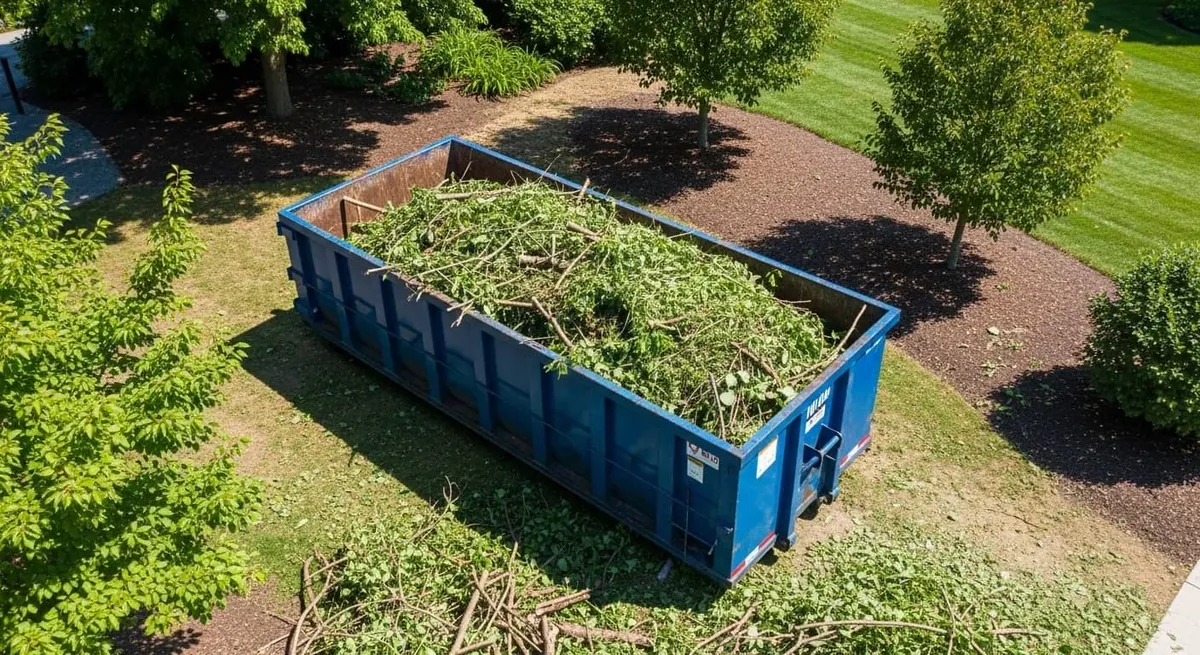
Yard Waste Dumpster Rental New Bedford MA across New Bedford and Bristol County
Start with the rule, because it shapes everything else. Massachusetts bans leaves and yard waste from disposal. Green material has to be composted or processed, which means it cannot ride along in a general container with the old carpet and the broken deck chairs. A yard waste container is a clean green load and nothing else, and that single constraint is the whole organising idea of this service.
It is easier than it sounds. Brush, branches, leaves, grass, hedge trimmings, garden clearance and storm blowdown all belong together. What does not belong is pressure-treated lumber from the old fence, the plastic pots, the bags themselves, root balls full of soil and stone, and anything with a nail in it. Keep those out and the load goes where it should without a conversation at the gate.
Storm work, coastal wind and what a nor'easter leaves behind
A hard blow off Buzzards Bay does the same thing every time. Limbs down across the waterfront neighbourhoods, whole trees over in the older streets where the canopy is mature, fence panels in the next garden, and every household on the block dragging material to the kerb on the same morning. Municipal pickup after a big storm is slow for exactly that reason, which is when a container in your own driveway starts making sense.
Storm debris arrives mixed, and that is the trap. A downed tree that took a fence and a shed roof with it produces green waste, treated lumber, roofing and metal all in one pile — four separate streams under the state bans. Sort it as you drag it rather than afterwards. If the storm also damaged the roof, that tear-off is a separate container entirely, and general household wreckage belongs in a junk removal box.
Tree work, brush and the stumps we need to talk about first
Brush is deceptive. It is mostly air, which is why a modest pile of limbs swallows far more container than anyone expects, and why we usually put a 20 yard on tree work rather than something smaller. Cut everything to manageable lengths and load it in layers instead of throwing it in whole — you can fit roughly twice as much in the same box and it will not spring back over the rails.
- Cut to about four feet where you can, and stack rather than pile
- Trunk sections are fine in reason, but rounds over a certain size get heavy fast — mention them on the call
- Stumps are a call-first item. Soil and stone in the root ball makes them extremely dense, and a single large stump can be most of a load on its own
- Keep soil out of a green load entirely — dirt belongs in a dedicated heavy debris container
Two peaks a year, and the properties that drive them
This work is seasonal and predictable. Spring is the clearance of everything the winter broke, plus the first hard cut-back of the year. Autumn is leaves and pre-winter tree work, and it is busier — every property owner on the South Coast wants deadwood out before the nor'easters arrive. Book ahead in both windows, because the trucks fill up in the same week that everybody else decides to start.
Seasonal and waterfront properties add their own rhythm: opening up in spring after a winter of salt wind, closing down in autumn, and hedge and tree work in between. Big rural lots inland towards Rochester, Lakeville and Freetown produce volume in a different way again — acreage rather than storm damage. We run Westport and the outer towns as routinely as the city itself, and there is more on where green material actually goes in the local disposal guide.
Sizes
Which container for yard waste & storm debris?
Every service runs in all four sizes. Match the material to the weight allowance and the rest takes care of itself.
| Size | Dimensions | Capacity | Weight included | Best for |
|---|---|---|---|---|
| 10 Yard Dumpster | 12 ft long × 8 ft wide × 3.5 ft high | about 3 pickup truck loads | 1–2 tons | Small bathroom remodels, single-room cleanouts, concrete and heavy debris, roofing up to about 15 squares. |
| 15 Yard Dumpster | 16 ft long × 8 ft wide × 4 ft high | about 4–5 pickup truck loads | 2–3 tons | Basement and attic cleanouts, kitchen remodels, medium roof tear-offs, small deck removals. |
| 20 Yard Dumpster | 22 ft long × 8 ft wide × 4.5 ft high | about 6 pickup truck loads | 3–4 tons | Whole-home decluttering, flooring and siding jobs, large tear-offs, drywall and mud phases. |
| 30 Yard Dumpster | 22 ft long × 8 ft wide × 6 ft high | about 9 pickup truck loads | 4–5 tons | Full-house renovations, new construction, estate clearances, commercial fit-outs and demolition. |
| 40 Yard Dumpster | 22 ft long × 8 ft wide × 8 ft high | about 12 pickup truck loads | 5–6 tons | Large commercial fit-outs, industrial clear-outs, major renovations and high-volume light debris. |
Talk to a real person
Need yard waste & storm debris in New Bedford?
Call (508) 501-1638 and describe the job. You will get a flat price and a delivery time on the same call — most orders before noon go out the same day.
Mon–Sat 7:00am – 6:00pm · Sun by appointment
Answers
Yard Waste & Storm Debris — your questions
Why can yard waste not go in a regular dumpster?
Massachusetts bans leaves and yard waste from disposal. Green material has to be composted or processed rather than buried, so it cannot travel mixed in with household or construction debris. That is why we run it as a separate clean load. It is genuinely simpler this way — one container of nothing but green material has a clear destination and no sorting to pay for.
What counts as yard waste?
Leaves, grass clippings, brush, branches, hedge and shrub trimmings, garden clearance and storm blowdown. What does not count is anything processed or manufactured: pressure-treated fence lumber, decking, plastic pots, landscape fabric, the plastic bags themselves, and soil or stone in a root ball. Keep those out and the load stays clean. Ask us about anything you are unsure of.
Can I put a tree stump in the container?
Call us before you do. Stumps carry soil and stone in the root ball, which makes them dramatically denser than the brush around them, and one large stump can account for most of a container's weight allowance on its own. Small stumps are usually fine. Big ones may need a heavy debris container instead, or grinding on site, which is often the cheaper route.
What size do I need for storm cleanup?
For a household with limbs down and a garden full of debris, 20 yards is the usual answer, because brush is mostly air and fills a box far faster than its weight suggests. Cutting everything to about four feet and stacking in layers rather than throwing branches in whole will roughly double what fits. Whole trees down need a conversation about how many pulls it takes.
How quickly can you deliver after a storm?
As fast as the roads and the weather allow, and often the same day. Right after a nor'easter the constraint is usually access rather than availability, because crews and utility trucks are working and some streets are blocked. We will tell you honestly what the window looks like when you call rather than book a slot we cannot hold. Call early on the first clear day.
Service area
Yard Waste & Storm Debris across the South Coast
We run roll-off dumpsters out of our 1011 Church St yard across Bristol County and Plymouth County — from the triple-decker streets of the North and South Ends to the village lanes at Padanaram and Mattapoisett, and west on I-195 as far as Swansea. If your town is not on this list, call us anyway. We probably still get there.