
Gut-outs and teardowns
Demolition Debris Dumpsters New Bedford MA
Interior gut-outs in old New Bedford housing stock produce far heavier debris than anybody expects. Containers sized for plaster and lath, with the material streams kept apart from day one.
- Licensed & insured
- Same-day delivery
- Flat-rate pricing
- Locally owned
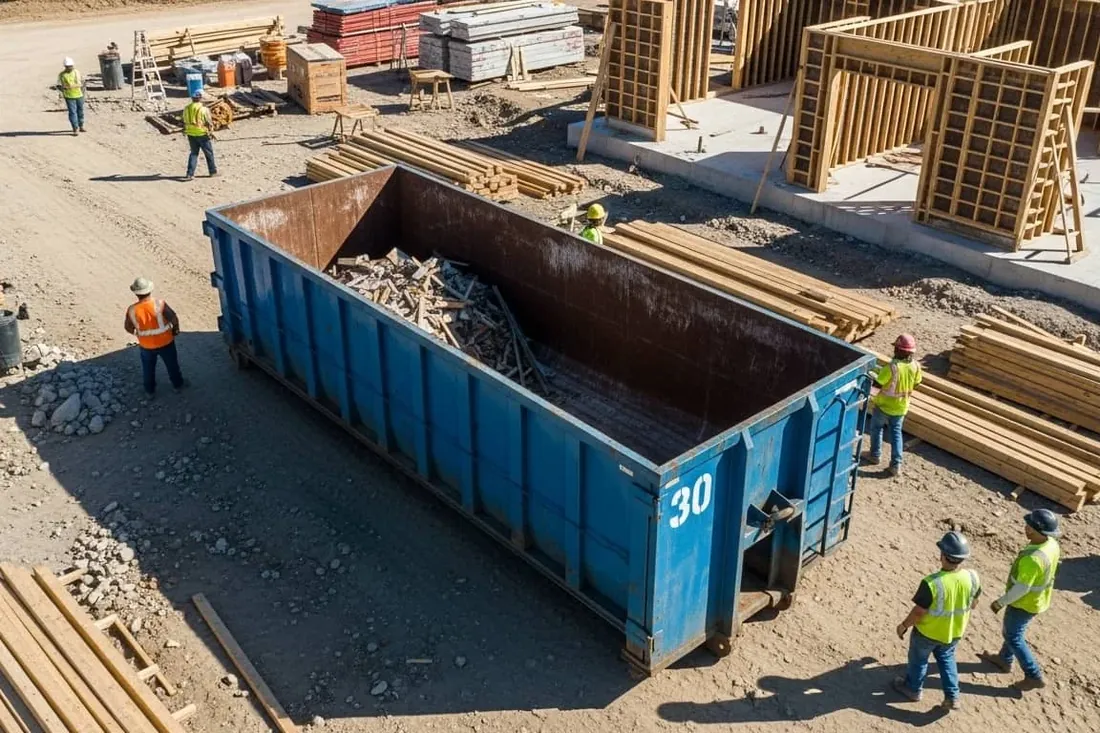
Demolition Debris Dumpsters New Bedford MA across New Bedford and Bristol County
Gut a room in a 1970s ranch and you get drywall. Gut a room in a 1905 triple-decker and you get plaster, wood lath, horsehair, a century of coal dust and a wall cavity full of debris that has been settling since balloon framing was normal. The two jobs look identical on a schedule and are nothing alike in a container. Plaster and lath is why demolition sizing goes wrong here more than anywhere else.
So we size these jobs by weight and fill line rather than by room count. A container that looks half empty can already be at its allowance, and there is no way to fix that once the truck has it on the scale. Tell us the age of the building and what the walls are actually made of before you pick a size, and the rest of the job gets much simpler to plan.
Plaster and lath weighs more than you think
Rough working numbers we use on the phone. A room of three-coat plaster over wood lath runs in the region of ten to twelve pounds per square foot of wall once you include the lath and the keys behind it — several times what the same wall in drywall would weigh. Add ceilings, which are usually the heaviest surface in the room, and a single moderately sized bedroom can produce well over a ton on its own.
- Take the 20 yard and fill it to a line, rather than a 30 that you will never legally fill
- Load flat and even — plaster heaped at the door end makes the container unsafe to winch
- Damp it down as you strip. Century-old plaster dust travels through a whole building and into the neighbours' windows
- Keep the lath out where you can — it is construction wood, which is banned from disposal and has its own route
If the job also produces masonry — chimney breast, foundation, a brick hearth — that belongs in a dedicated heavy debris container and not mixed in with the general demolition load.
Pre-1980 buildings: assess before you swing
Most of the housing stock we work around predates 1980, and a large share of it predates 1930. That means asbestos in pipe lagging, boiler jackets, floor tile and the mastic under it, some older joint compounds and certain siding and roofing products — and it means lead paint on almost every original window, door casing and stair rail. Neither is a reason to abandon a project. Both are a reason to have the building assessed by a licensed professional before demolition starts.
None of that material goes in one of our containers. Regulated asbestos and lead waste follow their own licensed disposal route, handled by a properly certified contractor, and it has to be dealt with before the general demolition debris starts moving. Where the work is phased into a wider renovation, plan the container schedule around it — construction containers for the rebuild come after the strip-out, not alongside it.
Keeping the streams apart on a gut job
Demolition is where the Massachusetts disposal bans hit hardest, because a gut-out produces almost every banned category at once. Asphalt pavement, brick and concrete. Metal, including old radiators, cast iron waste pipe, ductwork and appliances. Clean gypsum wallboard. Wood from construction and demolition, treated and untreated. Throwing that in one box does not make it disappear — it just moves the sorting cost downstream and onto your invoice.
The practical version on a tight site is a general container plus disciplined staging: a metal pile the scrap man takes, a clean wood pile, and masonry into its own heavy box. Radiators and cast iron alone are often worth taking out carefully rather than smashing. The construction debris guide covers how to stage this when there is no room to stage anything, and a 20 yard is the size most gut jobs settle on.
Sizes
Which container for demolition debris dumpsters?
Every service runs in all four sizes. Match the material to the weight allowance and the rest takes care of itself.
| Size | Dimensions | Capacity | Weight included | Best for |
|---|---|---|---|---|
| 10 Yard Dumpster | 12 ft long × 8 ft wide × 3.5 ft high | about 3 pickup truck loads | 1–2 tons | Small bathroom remodels, single-room cleanouts, concrete and heavy debris, roofing up to about 15 squares. |
| 15 Yard Dumpster | 16 ft long × 8 ft wide × 4 ft high | about 4–5 pickup truck loads | 2–3 tons | Basement and attic cleanouts, kitchen remodels, medium roof tear-offs, small deck removals. |
| 20 Yard Dumpster | 22 ft long × 8 ft wide × 4.5 ft high | about 6 pickup truck loads | 3–4 tons | Whole-home decluttering, flooring and siding jobs, large tear-offs, drywall and mud phases. |
| 30 Yard Dumpster | 22 ft long × 8 ft wide × 6 ft high | about 9 pickup truck loads | 4–5 tons | Full-house renovations, new construction, estate clearances, commercial fit-outs and demolition. |
| 40 Yard Dumpster | 22 ft long × 8 ft wide × 8 ft high | about 12 pickup truck loads | 5–6 tons | Large commercial fit-outs, industrial clear-outs, major renovations and high-volume light debris. |
Talk to a real person
Need demolition debris dumpsters in New Bedford?
Call (508) 501-1638 and describe the job. You will get a flat price and a delivery time on the same call — most orders before noon go out the same day.
Mon–Sat 7:00am – 6:00pm · Sun by appointment
Answers
Demolition Debris Dumpsters — your questions
What size dumpster do I need to gut a room?
For one room of plaster and lath in an old New Bedford house, a 20 yard filled to a line rather than to the top. Plaster is heavy enough that a container looking half empty may already be at its tonnage allowance, especially once ceilings come down. Drywall from a newer building is far lighter and behaves differently. Tell us the age of the house when you call.
Is plaster really heavier than drywall?
Considerably. Three-coat plaster over wood lath runs somewhere around ten to twelve pounds per square foot of wall surface once the lath and the keys behind it are included, and ceilings are usually heavier still. A single bedroom stripped to the studs can produce well over a ton. That is why demolition containers get sized by weight and fill line rather than by room count.
What about asbestos and lead paint in an old house?
Assume both are possible in anything built before 1980 and have the building assessed by a licensed professional before demolition begins. Asbestos turns up in pipe lagging, boiler jackets, floor tile and mastic; lead paint is on most original trim and windows. Neither can go in our containers. Regulated material follows its own licensed disposal route with a certified contractor.
Can I put everything from the demolition in one container?
Not in Massachusetts. The state bans asphalt pavement, brick and concrete, metal, clean gypsum wallboard, and construction and demolition wood from disposal, and a gut-out produces every one of those. Mixed loads get separated downstream and you pay for that either way. Staging a metal pile and a wood pile alongside the container is cheaper and takes about ten minutes to organise.
Do you take concrete and brick from a demolition?
Yes, but in a dedicated container rather than mixed with the general debris. Masonry is dense enough that it needs its own box with a fill line, and clean brick and concrete has to be recycled rather than disposed of, which is why a clean load is the cheapest heavy load there is. Chimney breasts, foundations and brick hearths all fall into this category.
Service area
Demolition Debris Dumpsters across the South Coast
We run roll-off dumpsters out of our 1011 Church St yard across Bristol County and Plymouth County — from the triple-decker streets of the North and South Ends to the village lanes at Padanaram and Mattapoisett, and west on I-195 as far as Swansea. If your town is not on this list, call us anyway. We probably still get there.