What Size Dumpster Do I Need? New Bedford Size Guide
How to choose between 10, 15, 20, 30 and 40 yard roll-offs in New Bedford: real dimensions, tonnage limits, tight-driveway clearances and six worked jobs.
ReadNew Bedford, MA guide
What happens to a New Bedford dumpster load after pickup, how Massachusetts waste bans route each material, and the sorting that actually cuts your disposal bill.
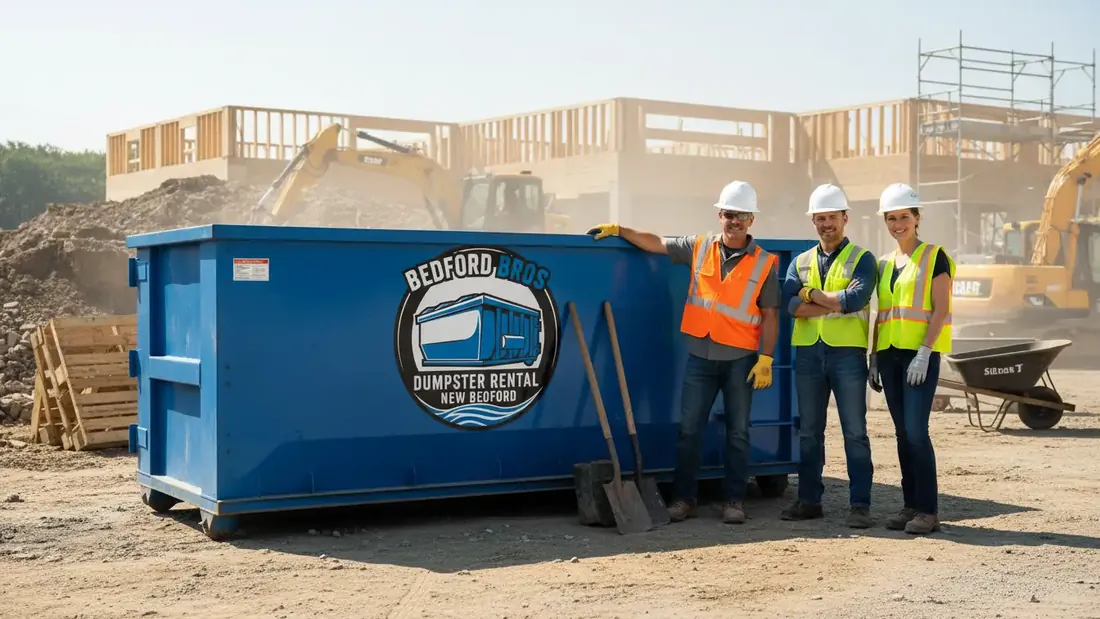
Every load that leaves a New Bedford driveway ends up somewhere specific, and it is almost never a single hole in the ground. A roll-off pulled off a triple-decker on the north end, or a job out in Dartmouth, goes first to a transfer station or a construction-and-demolition facility. It is tipped onto a floor, and anything with a market gets pulled back out — metal, clean wood, cardboard, concrete — partly by machine, partly by hand. What is left after that pass is what actually gets disposed of.
Massachusetts pushes that separation harder than any other state we know of. MassDEP maintains a list of materials banned from landfill and from combustion, and it is long: asphalt pavement, brick and concrete; metal of every kind, ferrous and non-ferrous, appliances included; clean gypsum wallboard; wood from construction and demolition, treated and untreated; leaves and yard waste; whole tires; recyclable paper, cardboard, glass and containers; cathode ray tubes and certain electronics; commercial organics over a volume threshold; and, since November 2022, mattresses, box springs and textiles. The current list is on the MassDEP waste ban page.
Here is the part that actually changes how people load a container, and it has nothing to do with lectures. A clean, single-material load is cheaper to tip than a mixed one, because the facility does not have to pay people and machines to pick it apart. Concrete only, metal only, wood only — those go straight to a recovery route. Mix four materials and you are buying the sorting labour.
Banned from disposal, and genuinely valuable when it is clean. Crushed ABC becomes aggregate for road base and fill. That is why contamination is fatal here: timber offcuts, plastic sheeting, buckets and loose soil all have to come out before the crusher will take it. Rebar cast inside a slab is normal and handled; loose junk thrown on top is not. Clean concrete is heavy, so it goes in a small container — see our concrete and heavy debris service and the 10 yard dumpster, which is the right can for a patio or a foundation tear-out.
Banned from disposal and worth real money. Steel, copper, aluminium, brass, cast-iron radiators, ductwork, hot water tanks, washers and dryers, swing sets, chain link. In a port city with an active marine trade, metal moves easily. Always pull it into its own pile rather than burying it in a mixed load you are paying for by the ton.
Banned when it is clean — new offcuts from a hang, unpainted, no plaster skim, no insulation tangled through it. Clean board is processed. Old painted plaster-and-lath off a Victorian is a different material and goes as general C&D. If you are gutting and hanging in the same week, keep the new offcuts separate.
Banned from disposal, treated and untreated alike, and routed to processing rather than the tip face. Framing lumber, sheathing, pallets, decking, fencing. Painted and pressure-treated wood has restrictions on where it can go, so tell us what you have before the drop. Our construction dumpster service covers the sorting questions on framing and gut jobs.
Banned, and easy. Break boxes down flat. On a renovation with new appliances, cabinets or flooring going in, packaging alone can fill a third of a container if nobody flattens it, and you pay for that air.
Banned from disposal statewide and composted or ground instead. Brush, leaves, grass and clippings need to be a clean load — no bagged trash, no lumber, no plastic pots. See yard waste removal for how we run those.
In November 2022, Massachusetts added mattresses and box springs, and textiles, to the disposal ban list. Years on, we still have this conversation on almost every clearance.
A mattress cannot simply be thrown in a container and sent for burial. Mattresses are dismantled: steel springs to scrap, foam to carpet underlay and similar, wood frame to processing, fabric to textile recovery. The practical consequence is that they are counted and handled separately, and carry a per-unit handling charge wherever they go. Tell us the count up front. Six mattresses out of a three-family is normal and no problem — an unannounced six at pickup is.
Textiles catch people out even harder, because the ban covers far more than wearable clothing. Bedding, towels, curtains, footwear, belts, bags and fabric that is stained or torn all have a recovery route — fibre is reprocessed into insulation, wiping cloth and industrial felt. Damaged does not mean disposable. Only wet, mouldy or contaminated fabric falls out of the system.
An estate cleanout generates both in volume, usually at the same time, usually under a deadline. Bag textiles separately as you go and keep mattresses accessible rather than buried at the back of the container. Our estate cleanout checklist runs through the order of operations.
Nothing here goes in any dumpster, ours or anyone else's: oil-based paint, stains, solvents, thinners, gasoline, kerosene, diesel, motor oil, antifreeze, pesticides, herbicides, pool chemicals, driveway sealer, and batteries of all types including lithium-ion. Lithium cells start fires in compactors — not theoretical, it happens to haulers regularly.
Each has its own collection route, usually a municipal household hazardous waste collection day or a permanent drop-off. Which applies depends on your town, so check with the City of New Bedford or your own town hall rather than guessing. Latex paint is the common exception: fully dried out, many municipalities treat it as regular waste, but confirm locally.
This matters more here than most places. New Bedford sits on Buzzards Bay, and South Coast driveways drain toward the same water the port works in. A cracked jug of solvent in an open container is a straight line to a storm drain and then the harbour.
Cathode ray tube screens and certain other electronics are banned and go to e-waste handling. Whole tires are banned outright and should never be tossed in with demolition; tire shops and specific facilities take them. Propane cylinders, including the standard grill bottle, are pressure vessels and are refused everywhere.
Refrigerators, freezers, window air conditioners and dehumidifiers all contain refrigerant, which must be professionally recovered and certified before the shell can be scrapped. That is federal law, not local preference. An untagged fridge gets the unit refused and sometimes the whole load flagged. Have it evacuated first, or tell us and we will route it.
Most of New Bedford's housing stock predates 1980 by a wide margin, and so does a lot of Fairhaven, Acushnet and Fall River. Pipe lagging, boiler insulation, floor tile and the mastic under it, some siding and some roofing felt can all contain asbestos. It is prohibited in any container, full stop. Suspect material means licensed abatement — survey, notification and disposal by a Massachusetts-licensed contractor. If you are not sure what you are looking at in a cellar, have it tested before anyone swings a bar.
| Material | Mixed container? | What Massachusetts requires | What ruins its recovery |
|---|---|---|---|
| Concrete, brick, asphalt | No — clean load only | Banned from disposal; crushed for aggregate | Loose rebar, timber, plastic, soil, trash |
| Scrap metal and appliances | Better separated | Banned from disposal; scrapped | Mixing with general waste; unevacuated refrigerant |
| Clean gypsum wallboard | No, if clean | Banned when clean; processed | Paint, plaster skim, insulation, joint debris |
| C&D wood | Separate where possible | Banned from disposal; ground and processed | Mixed trash, wallboard dust, soil |
| Cardboard and paper | Separate and flatten | Banned; recycled | Wet, greasy or food-soiled board |
| Mattresses and box springs | No | Banned since Nov 2022; dismantled for components | Wet, mould-damaged or infested units |
| Textiles | No | Banned since Nov 2022; fibre recovery | Wet, mouldy or chemically contaminated fabric |
| Leaves and yard waste | No — clean green load | Banned; composted or ground | Bagged trash, lumber, plastic pots, soil |
| Whole tires | No | Banned; tire-specific handling | Rims left on, mixing with demolition |
| Electronics and CRTs | No | Banned; e-waste handling | Crushing or breaking screens in the can |
| Paint, fuels, chemicals, batteries | Never | Household hazardous waste collection | Any leak contaminates the whole load |
| Asbestos material | Never | Licensed abatement only | Not applicable — do not handle it yourself |
| General mixed waste | Yes | Sorted at a transfer or C&D facility | Any single banned item can get it rejected |
One prohibited item can get an entire container turned away at the scale house, and then you are paying for a second trip and a second tip. Short of rejection, contamination quietly downgrades a load: a concrete container with two pallets and a bag of trash loses the aggregate rate and becomes mixed C&D. Metal with plastic and wood through it stops being scrap. A green load with one bag of household trash is no longer compostable. The cheap route closes, and the difference lands on your invoice.
On a typical South Coast job, three or four piles pay for themselves. Metal in one spot — the easiest money on any renovation. Clean concrete and masonry in its own container if there is real quantity. Cardboard flattened and out of the weather. Everything else in the can. On a clearance, add a fourth: mattresses and bagged textiles staged where the driver can count them.
Order the container for the biggest stream and work the rest around it. Not sure how that splits on your job? Talk it through before the drop — our guide to what can go in a dumpster in Massachusetts covers the prohibited list in more detail, and we run this same conversation across the towns we serve, from Westport and Swansea through to Mattapoisett, Marion and Wareham.
Tell us what is coming out of the building and we will tell you how to split it and which size makes sense. Call Bedford Bros Dumpster Rental at (508) 501-1638, or reach the yard through our contact page.
Talk to a real person
Call and describe the job. Flat price, stated tonnage, and a delivery time on the same call.
Mon–Sat 7:00am – 6:00pm · Sun by appointment
From this guide
No. Mattresses and box springs were added to the state disposal ban list in November 2022, so they cannot be landfilled or burned. They are dismantled instead, with springs going to scrap metal, foam to secondary products and the frame to wood processing. They are handled and charged separately, so tell us the count when you book rather than at pickup.
It goes to a transfer station or a construction and demolition processing facility, where the load is tipped and recoverable material is separated out by machine and by hand. Metal, clean wood, concrete and cardboard are pulled for recovery. Only the remainder is disposed of. A clean single-material load skips most of that sorting, which is why it costs less.
Clean concrete, brick and asphalt are crushed into aggregate, which is a genuine product with a market. That route only works if the material is free of loose rebar, timber, plastic and soil. Once contamination is in there, the facility has to sort it and the load is rebilled as mixed construction debris at a higher rate.
Not in any container. Oil-based paint, solvents, fuels, motor oil, pesticides, pool chemicals and batteries all have their own collection routes, usually a municipal household hazardous waste collection event or a permanent drop-off point. Check with the City of New Bedford or your own town hall for current arrangements. Fully dried latex paint is often the exception, but confirm locally first.
No. Asbestos is prohibited in any roll-off container regardless of how it is wrapped or bagged. In pre-1980 buildings, which covers most of New Bedford's older housing, it can be present in pipe lagging, boiler insulation, floor tile and mastic, some siding and some roofing felt. Suspect material requires testing and licensed abatement before demolition begins.
Keep reading
How to choose between 10, 15, 20, 30 and 40 yard roll-offs in New Bedford: real dimensions, tonnage limits, tight-driveway clearances and six worked jobs.
ReadAn operator's breakdown of New Bedford dumpster pricing: what a flat rate should include, the add-ons to ask about, and why weight decides your bill.
ReadMassachusetts bans a long list of materials from disposal. A New Bedford operator walks through what goes in a container, what never does, and what contamination really costs.
Read